
Teamwork in nursing is an essential skill because it creates valuable patient, professional, and personal benefits. With teamwork, you create a supportive and effective nursing workforce environment. Start building teamwork skills in nursing school by actively collaborating in study groups, labs, and clinical rotations.
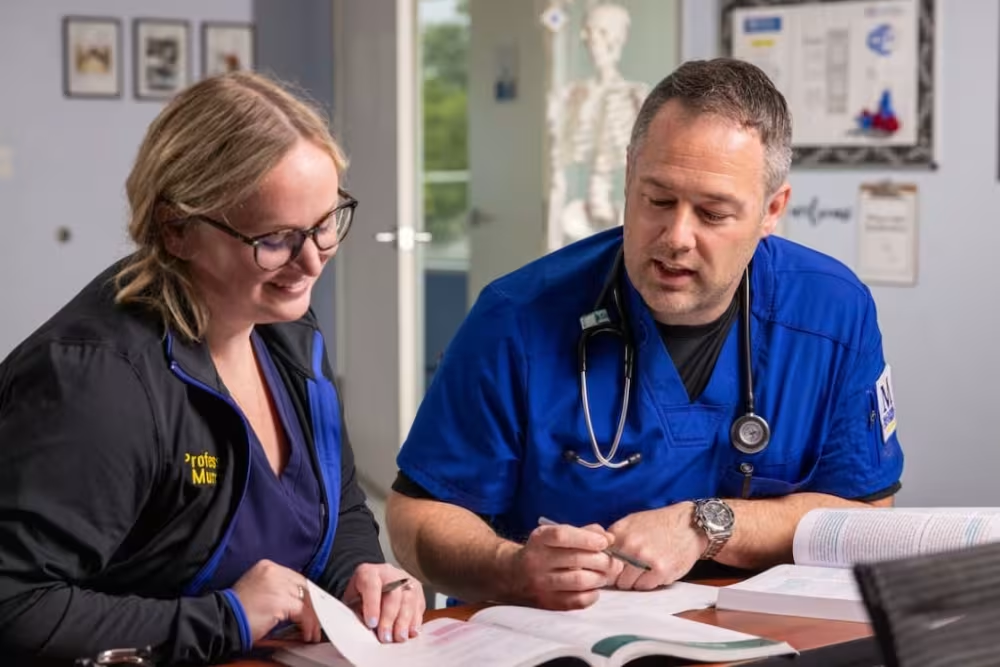
Facilitating health and recovery, maintaining patient records, and working in a fast-paced hospital environment are just a few of the job duties of a registered nurse. Effective nursing care relies heavily on teamwork and collaboration. Whether you are a nursing student or an experienced nurse, strong teamwork in nursing is essential for success.
Madonna University’s Accelerated Bachelor of Science in Nursing (ABSN) program offers the ideal environment for building your teamwork skills for your nursing career. Through online coursework, skills and simulation labs, and clinical rotations, you will be prepared to take the NCLEX-RN licensing exam and for your nursing career. With Madonna University’s ABSN program, you can earn your BSN in as few as 16 months while building a strong foundation for your nursing career.
Explore why teamwork matters, how nurses benefit, and how to start developing collaboration skills in nursing school.
Why Does Teamwork in Nursing Matter?
Collaboration in nursing care is essential for positive patient outcomes. Working and communicating as a team helps catch even small changes in a patient’s condition and prevent common errors that may arise from situations like handing off care between shifts.
Teamwork also helps nurses feel more supported and satisfied in a healthcare environment. With a strong, connected, and efficient work environment, you will feel less isolated and be less likely to experience burnout. Teamwork is key to fostering healthy work settings.
What are the Benefits of Collaboration in Nursing?
Collaborating as a team in nursing creates benefits like effective communication, which leads to better patient outcomes. With improved communication, you will build more trust with your patients, become a more effective advocate, and reduce the likelihood of medical errors.

Learn more about why strong interpersonal skills matter in nursing.
Patient Benefits
When nurses collaborate, their patients benefit. Since collaboration involves cross-checking and effective communication between nurses and other healthcare teams, safety is improved.
According to the National Library of Medicine, patients may also be more satisfied because they feel safer when they are treated with skill and respect. When patients feel that their concerns are addressed and their nurses are confident, they feel more relaxed and confident about their own care.
Teamwork in nursing also creates an environment of comprehensive care. By working as a team, nurses, along with physicians, pharmacists, social workers, and therapists, can utilize their strengths and specialties to help patients as much as possible.
Professional Benefits
When nurses work together, they also reap many professional benefits. Teamwork in nursing creates a positive, supportive work environment among all healthcare professionals. This teamwork promotes respect among nurses, along with more motivation and focus. An environment where nurses can feel secure while raising patient care concerns to a physician will see fewer errors and better outcomes.
Personal Benefits
Teamwork in nursing not only benefits your patients and profession but also benefits you personally. Working as a team provides emotional support that reduces nurse burnout, a serious condition affecting many nurses as a result of working in a demanding environment without adequate support.
With support behind their decisions, nurses experience higher job satisfaction and reduced stress. You will also be able to learn from your coworkers about their new ideas and improve your problem-solving and critical thinking skills by observing their unique approaches to various situations.
How Does Teamwork Start in Nursing School?
Effective teamwork skills begin in nursing school. If you learn how to collaborate and work as a team while building your nursing knowledge, it will come naturally to you in your future nursing career. You can begin building teamwork by utilizing study groups, practicing active communication in labs, and communicating effectively during clinical rotations.

Learn more about why it is important to earn a Bachelor of Science in Nursing.
Utilizing Study Groups
By utilizing study groups, you will develop strong teamwork skills before you enter the nursing workforce. These interactions provide essential practice in keeping one another accountable while mimicking real-world nursing preparation. By engaging with a team, you will be able to understand the nursing coursework more deeply, improve your grades, and transform teamwork from a skill into a habit you can carry into your future career.
Practicing in Skills and Simulation Labs
During skills and simulation labs, you can practice actively communicating in a safe setting. If you make a mistake, you will have the support to fix your error with mentors to guide you.
To actively communicate, practice asking questions, sharing your observations, and listening to your peers and mentors. If you practice active collaboration in skills and simulation labs, you can build your confidence while retaining more information.
Communicating during Clinical Rotations
During your clinical rotations, practice listening to your mentors as they guide you through situations. Since your time in clinical rotations is a practice ground for the rest of your nursing career, be clear about sharing your learning needs and challenges.
Be sure to show humility and respect to all the healthcare professionals you work with. Every worker plays an essential role in patient care as part of a healthcare team and can impart vital insights to enhance your practice.
Examples of Teamwork in Nursing
What does teamwork in nursing look like in an everyday nursing shift? Teamwork in nursing can be as simple as sharing knowledge and skills with your peers to help develop expertise in the field. It may also appear as stepping in to help another nurse in need.
In your day-to-day, you might assist with a patient transfer or answer a patient call to help a nurse who is busy with another task. Altogether, teamwork in nursing ensures more comprehensive and efficient patient care.
Build Collaboration Skills at Madonna University
If you are ready to learn how to be a productive member of a healthcare team, consider Madonna University’s ABSN program. To be eligible for our hybrid program, Madonna University’s ABSN program requires applicants to have a minimum of 60 college credits or a non-nursing bachelor’s degree from an accredited institution. If you’re unsure about your qualifications, a dedicated admissions representative can answer any questions you may have about the ABSN admission process.
Contact us to learn more about developing your nursing teamwork skills in Madonna University’s ABSN program.