
Pursuing nursing as a second career offers a fulfilling career with opportunities for advancement. Several reasons to change careers to nursing later in life include high demand, career outlook, livable wages, and meaningful work. To make the switch, many career changers choose an accelerated program that leverages their previous education.

Across the U.S., nursing has become a popular option for career-changers seeking fulfilling work and job security in a field that continues to grow. There are many reasons why adults are pursuing nursing as a second career, but why are they making the change?
Nursing offers a unique array of potential benefits. Livable wages, positive career outlook, an impact on others’ lives, and growth potential are only some of them. Many pathways exist to help adults make a career change to nursing later in life, including accelerated programs such as Madonna University’s Accelerated Bachelor of Science in Nursing (ABSN) Program. Here, you can leverage your previous education to discover how to become a nurse later in life.
Let’s explore why nursing could be the right choice for your second career and how to enroll in an accelerated nursing program.
Why Consider a Career Change to Nursing?
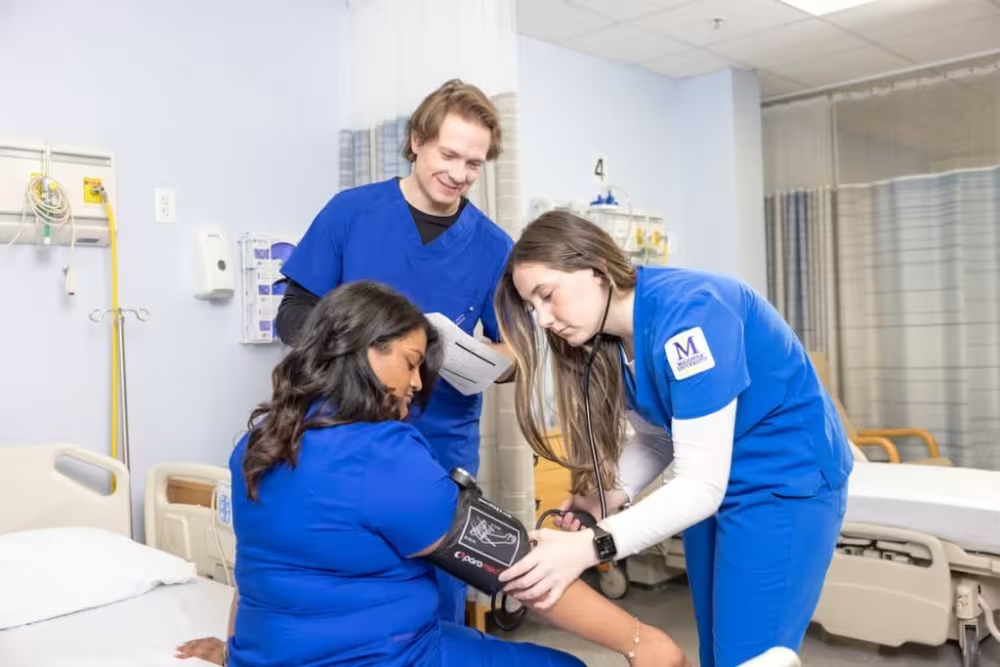
Choosing to change careers to nursing is an important decision, so it’s equally important to understand why you want to become a nurse. The National Library of Medicine found that about 50% of people pursue nursing to help and serve others. Nursing also offers many personal benefits, such as high demand, a strong career outlook, and a rewarding salary.
Unsure about making the switch? Learn more about how to know if nursing is right for you.
High Demand
Becoming a nurse offers a unique level of job security that few industries can match. The U.S. Bureau of Labor Statistics (BLS) reports that the employment of registered nurses (RNs) is expected to grow by 5% from 2024 to 2034, adding 166,100 jobs over this period.
Career Outlook
As the nursing workforce ages and retires, the nursing career outlook remains strong nationwide. It is also promising in Michigan, where Madonna University is located. A survey conducted by the Michigan Public Health Institute found that over 56% of Michigan nurses are over 55 years old. As the older half of the workforce retires, leadership opportunities may arise.
Salary
According to the BLS, nurses had a median annual salary of $93,600 in 2024, which is 89% higher than the average median salary across all occupations. Keep in mind that this figure varies according to experience, location, and specialty.
If you are looking for an in-demand career with ample opportunity for wage and role advancement that is also impactful on your community, then making the career switch to nursing may be right for you. But how can you get started?

Benefits of Nursing as a Second Career
Nursing as a second career offers several unique benefits that will help with your career:
- Transferable skills payoff: You can apply your previous job experience to your nursing career.
- Room for career growth: Nursing offers many opportunities for upward mobility, including administrative or advanced practice roles.
- Utilizing previous education: If you’ve already earned a degree in a non-nursing field, you don’t need to start your career from scratch. Your current degree can be used to accelerate your nursing education through an ABSN program.
- Fulfilling work: Through nursing, you can make a tangible difference in the lives of your patients and give back to your community.
No matter where you begin, becoming a nurse is an excellent opportunity to apply your skills to a meaningful career with room to grow.
How to Become a Nurse Later in Life
Taking the first step toward becoming a nurse can feel daunting; luckily, you are not limited to a single pathway into nursing.
Research Nursing School Options
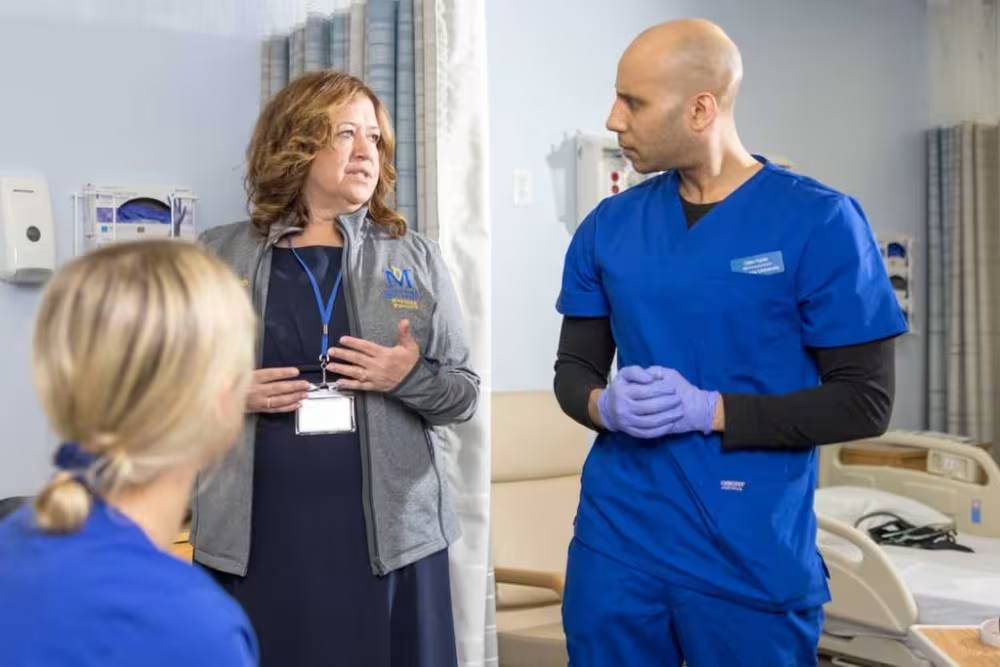
When becoming a nurse later in life, start by researching your nursing school options. Based on your prior academic experience, different nursing school pathways may apply to you. For example, if you already have a bachelor’s degree in a non-nursing discipline or a minimum of 60 credits from an accredited institution, you may qualify for an accelerated nursing program.
ABSNs can typically be completed in 12 to 18 months, depending on the program, rather than the traditional four years. This can significantly reduce the time it takes to begin working as an RN. With Madonna University’s ABSN program, you could earn your nursing degree in as few as 16 months.
Want to know more? Learn about the prerequisites for nursing
Enroll in an ABSN Program
After working with an admissions representative to ensure you meet all ABSN requirements for your chosen program, the next step is to select your preferred start date and enroll. While ABSN programs vary in length, Madonna University’s ABSN program near Metro Detroit takes 16 months and spans four full-time semesters.
Madonna’s hybrid ABSN is divided into three program components:
- Online coursework: Delivered through our e-learning platform, students can learn the theory behind nursing care wherever they are most comfortable, provided assignment deadlines are still met.
- Simulation labs: Held at our accelerated nursing program site, students use state-of-the-art medical training equipment to practice fundamental nursing skills under the guidance of instructors.
- Clinical rotations: Students travel to Madonna University’s clinical partners’ facilities to build hard and soft nursing skills, caring for real-life patients in a variety of settings and specialties.
Upon completion of the three ABSN curriculum components, students will gain the educational foundation to sit for the NCLEX-RN.
Graduate and Pass the NCLEX-RN
After graduation, the last step to becoming a licensed Registered Nurse is passing the NCLEX-RN. The exam tests critical thinking skills for aspiring nurses and ensures those entering the industry can meet the clinical standards of care. Passing the NCLEX-RN is required to legally practice as a Registered Nurse in the U.S.
Once you complete all these steps, you will have successfully gained licensure as a registered nurse and will be ready to practice.
Enroll in Madonna University’s ABSN Program
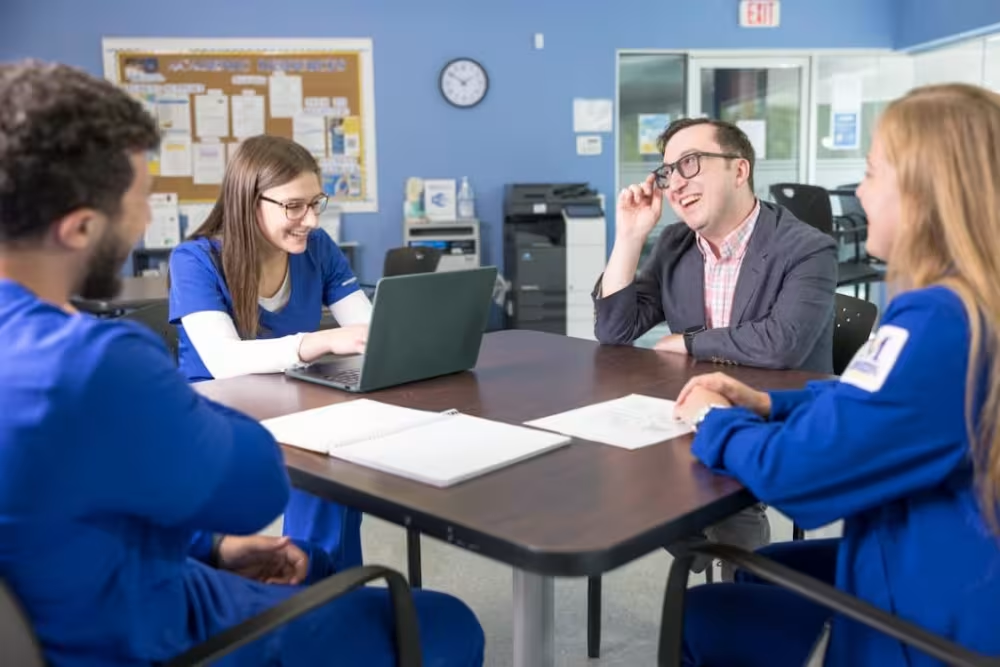
The ABSN program at Madonna University can help you pursue your career goals and instill the mindset needed to make a difference. Stemming from our Franciscan values, Madonna University’s mission is to ensure every student graduates with the skills to become an effective leader, a competent scholar, and a socially responsible community member.
Request info today to learn more about the ABSN program and what you need to get started on your journey to becoming a nurse.