
As an emergency room nurse, time management, task tracking, and clinical judgment are essential for new nurses. The most important thing is not to panic, focus on the basics, and lean on your peers. Building experience is a challenge, but the reward of seeing patients recover is a worthwhile achievement.

The emergency room (ER) can be a culture shock for both nurses and patients. Many people think that problems in the ER are resolved as quickly as on TV, but, realistically, things move much more slowly. Unlike in an hour-long medical drama, the emergency room nurses and staff likely won’t have answers right away.
So, what do ER nurses do? First, they rule out the big scary things that could seriously harm or kill patients based on what’s affecting them at that moment. If nothing poses an imminent threat to patients, staff will likely recommend that patients follow up with their primary care providers, who can order additional tests. Patients won’t always receive their diagnoses in the ER, but this visit is an important step forward in their care.
Having worked primarily in the ER and pediatric ER for almost 16 years, I’ve learned many lessons. Below, I share some of the tips and tricks I’ve picked up in my career and provide insights into how to decide whether ER nursing is right for you.
Pro Tips For ER Nurses
Let’s start with some ER nurse skills that are essential in the ER but aren’t explicitly taught in your nursing curriculum.
Time Management
Time management is a skill you’ll likely begin learning in school, just with lower stakes than in the ER. In school, you’ll have to schedule study time and prioritize tasks, such as deciding whether to write a paper or study for an exam. You may use the same kind of reasoning in the ER.
As an emergency room nurse, when choosing where to direct your attention in a clinical setting, it’s important to consider not only which patients are sickest and which tasks are most urgent, but also what can be completed immediately.
For example, you may have four patients, one of whom needs to be discharged and another needs labs drawn to rule out a heart attack. The labs will take precedence over the patient waiting to be discharged, as their condition won’t change if they are forced to wait, which may not be the case for the potential heart-attack patient.
If there are other tests or treatments that will show immediate results and can help patients sooner, then those might need to be your focus.

Besides ER nursing, there are many specialties for nurses to choose from. Discover the top five nursing specialties to consider for your career.
Task Tracking
There are many details to remember in the ER. Among other things, you’ll need to track orders for tests and treatments, medications, and even your patients’ locations. To keep everything straight, the electronic medical record will be your primary source of information.
Clinical Judgment
The key to developing your clinical judgment is knowing who your resources are and where they are, so that if you have any questions, you know who to go to in an emergency. Then you can go back to the basics.
Start with the ABCs (airway, breathing, and circulation) and work your way up to bigger problems. If those three things are in good order, you have time to fix other issues.
What to Avoid as an Emergency Room Nurse
First, don’t panic. Remain calm to help keep your patients and their family members calm. Even if you’re panicking on the inside, stay composed on the outside. Then, go back to the basics, such as your patient assessment skills.
Look at your patient and ask yourself these questions:
- Are they alert?
- Are they responsive?
- Are they talking to you?
- How is their breathing?
You may forget things or encounter a situation you haven’t learned about. As long as you can cover the basics, you will have the support of other nurses and doctors to help you and cover any gaps in your experience.
The greatest challenge when entering the ER is not knowing what you don’t know. ... It’s essential that you lean on those with experience.
Chelsea Girolamo, DE-MSN
ER Nursing Challenges
The greatest challenge when entering the ER is not knowing what you don’t know. Unfortunately, there’s no real solution other than doing your best, taking care of your patients, and learning from your experiences.
My first job was on a pediatric floor where we had many respiratory patients. Eventually, I started seeing patterns in my patients, and I could make connections. I would think to myself, “The last time I tended to a child who looked like this, they got really sick in a couple of hours. So, I’m going to keep an eye on this one.”
You don’t have those references at the beginning of your career, which is why it’s important to have resources and good relationships with your co-workers. In the ER, it’s essential that you lean on those with experience. If you have a funny feeling about a patient, these colleagues can help confirm or deny your suspicions.
ER Nurse Certifications and Training
You will earn certain basic certifications, such as CPR, as part of your education. There are several other certifications, however, that will help you prepare for situations you’ll encounter in the ER and further hone key skills, including:
- Advanced cardiac life support (ACLS)
- Emergency nurse pediatric course (ENPC)
- Pediatric advanced life support (PALS)
- Trauma nurse certification course (TNCC)
The ACLS and PALS (the pediatric version of ACLS) certifications can help you become familiar with the steps to follow during a code. Coding is the general term used when a patient requires immediate intervention, often for cardiac or respiratory arrest.
Some hospitals use a coding algorithm that makes nurses responsible for following the steps to resuscitate patients, allowing doctors to focus on investigating and addressing the causes.
Depending on whether you’re working in a trauma center or a pediatric ER, the TNCC and ENPC can teach you the setting-specific procedures needed for these roles. It’s best to wait until you’re already working in one of these roles before pursuing either of these ER nurse certifications, since many hospitals will pay for their nurses to advance their knowledge of care.

How to Decide Whether ER Nursing Is Right for You
The best way to determine whether ER nursing is your preferred path is to spend time in an ER. Start with your local hospitals and contact them about shadowing opportunities. Many hospitals will coordinate with you to schedule a time to follow an ER nurse during their shift, allowing you to see what the work is like and ask questions.
An alternative is gaining experience as a volunteer firefighter or an emergency medical services responder. In these roles, you’ll come into frequent contact with ER professionals and learn the basics of patient assessment and life support techniques. Having this background will put you ahead of your peers in your nursing education and can inform your decision to pursue ER nursing.
Another resource is your clinical instructors. If you let them know that you’re interested in becoming an emergency room nurse, they can connect you with opportunities throughout your clinical rotations that align with your interests.
Why Work in the ER?
The ER may not be as glamorous as portrayed on TV, but there are still plenty of rewarding moments.
When patients arrive at the ER with pain or difficulty breathing, ER nurses have the privilege of seeing their condition improve in real time as their treatments take effect. For example, the change in condition from when a patient experiencing an asthma attack enters the ER to after the medicine is administered is visually dramatic.
It’s patients like these who remind you that, for all the patients who don’t get a diagnosis or a cure, you are still making a difference.
The ER is also one of the best places to see holistic nursing and multidisciplinary care in action. Holistic care encourages nurses to consider the whole patient when determining treatment, including the patient’s lifestyle, culture, and career. This often leads nurses to coordinate with professionals from other disciplines.
One of an ER nurse’s responsibilities is to be a hub for patient care, coordinating everyone involved and connecting patients to the resources they need.
Find out more about how teamwork in nursing improves patient care.

The Future Of ER Nursing
In my career, I’ve noticed a difference between pediatric and adult nursing regarding the attention paid to patient comfort. In pediatric care, we have brightly colored walls, posters, and toys to help create a positive environment. We also offer therapy to help patients understand and cope with their injuries or illnesses. When we start an IV, we distract the patient with bubbles or an iPad, for instance.
With adult patients, care and communication are much more direct. This is despite the fact that many adults have a fear of IVs or don’t understand medical terminology. I believe there is room in the standard of ER care to show adults the same patience and empathy extended to pediatric patients, since they are all navigating uncertain situations.
This is where new emergency room nurses really have an opportunity to shine.
Does Having a Varied Background Help Emergency Room Nurses?
Nursing is one of those professions where any type of background is helpful. If you previously worked as a waiter or waitress, you’ll have developed really helpful personal skills, such as remembering orders and communicating with customers.
Having the skills to defuse situations, comfort your patients, and educate and talk with people is crucial in the ER and in nursing in general. Even people who transfer to nursing from vastly different occupations, such as engineering or banking, will benefit from their math skills and other proficiencies.
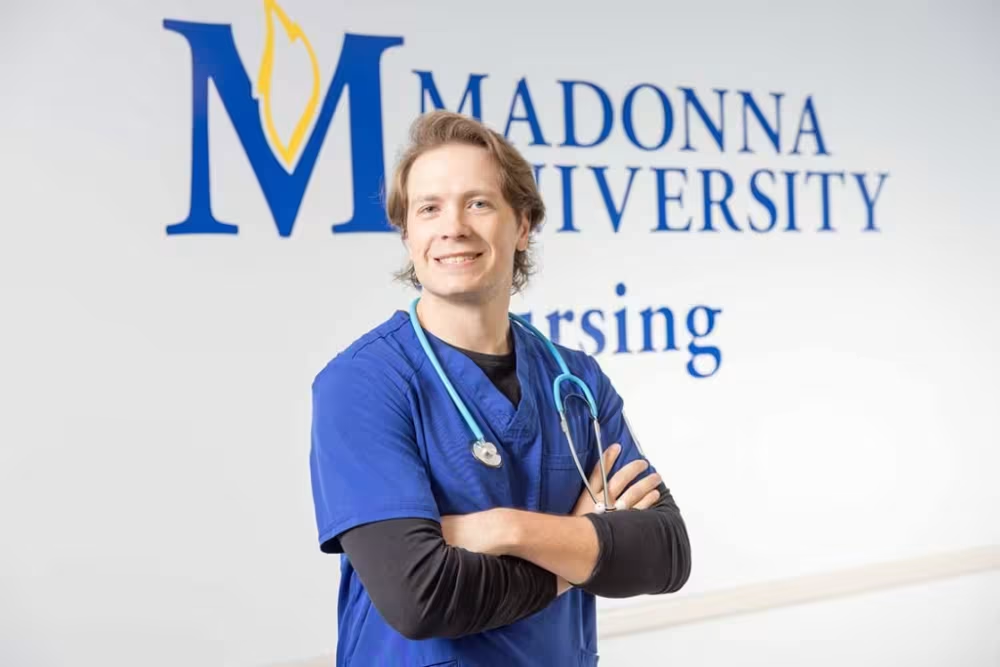
Choose the ABSN at Madonna University
Most students enrolling in an Accelerated Bachelor of Science in Nursing (ABSN) program have more life experience than those graduating from a traditional BSN program, lending them the confidence and maturity to communicate with adult patients as equals. At Madonna University, our mission is to build on your skills for your spiritual, intellectual, and personal growth, helping you become an effective leader and nurse.
Request info and connect with Madonna’s admissions team to learn more about the ABSN program.

Chelsea Girolamo, MSN-ED, is a registered nurse and director of Madonna University’s Accelerated Bachelor of Science in Nursing program. In addition to being a full-time faculty member of the College of Nursing and Health, she works in the emergency department of a Metro Detroit hospital and has a wide range of clinical experience in pediatrics and emergency nursing. Professor Girolamo is a certified Pediatric Nurse and a Certified Pediatric Emergency Nurse