
Critical care nursing is a specialty that involves caring for patients with life-threatening injuries and illnesses, often in the intensive care unit or ICU. The types of ICUs include pediatric and cardiac ICUs. To qualify for critical care unit nursing jobs, you’ll need a nursing degree and an RN license.
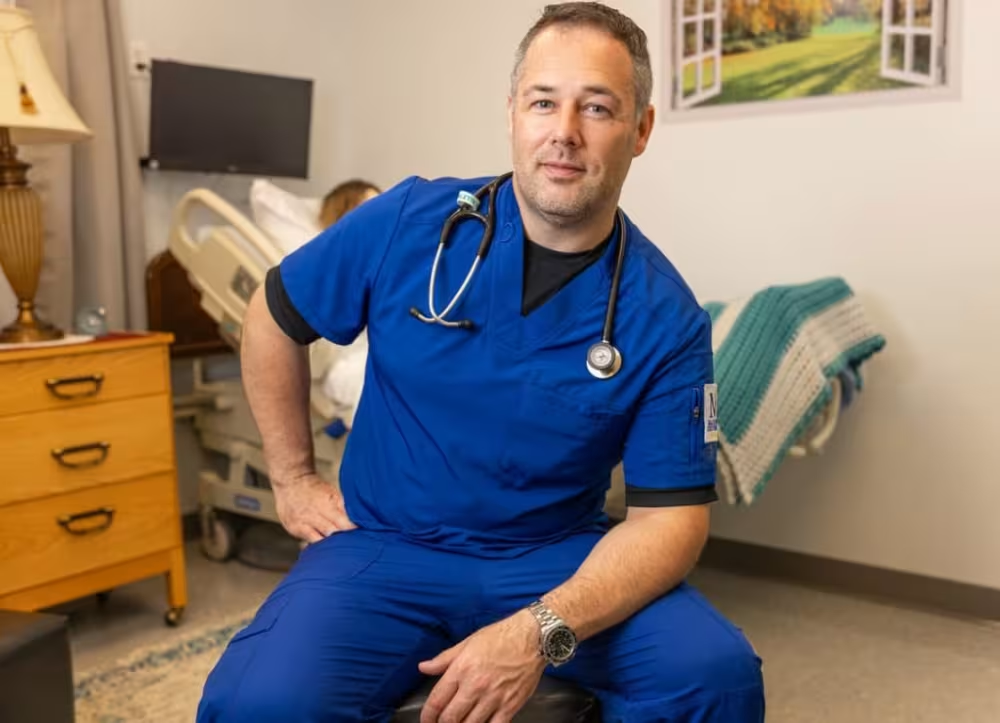
Each year in the U.S., more than 1 million patients are admitted to intensive care units (ICUs) for specialized care for critical
life-threatening injuries and illnesses. These can range from heart attacks to traumatic amputations to respiratory failure and much more. Patients in the ICU need continuous monitoring and intensive care for complex conditions. If you feel motivated to work with critically ill patients, you might consider pursuing a career in critical care nursing as an ICU nurse.
Madonna University can help you get started in nursing, and you don’t need prior healthcare experience. Madonna’s Accelerated Bachelor of Science in Nursing (ABSN) program is designed specifically for transfer students and career switchers with either a completed non-nursing degree or at least 60 non-nursing college credits. With our ABSN, you could earn a nursing degree in as few as 16 months.
Before deciding to pursue a career in the ICU, you should get the answers to some common questions, such as “What do ICU nurses do?” and “How much do ICU nurses make?” You’ll also want to review the education and licensure requirements, as well as the mandatory and optional certifications for ICU nurses.

Consider how to choose the right nursing program for your needs.
What Does an ICU Nurse Do?
ICU nurses care for patients with life-threatening injuries and illnesses. As an ICU nurse, you are likely to see a wide range of medical conditions, including:
- Cardiac conditions like heart attacks
- Neurological conditions like strokes
- Organ failure
- Sepsis/septic shock
- Severe burns
- Severe trauma, such as traumatic amputations
Every nursing shift in the ICU starts with patient handover, also called a shift report. The incoming nurses review the patients and talk through their needs with the outgoing nurses. The discussion might include a review of patients’ sedation, vital signs, and respiratory status, as well as daily plans and goals, family dynamics, and social circumstances that can influence care.
After the handover is complete, an ICU nurse will check each patient, ensuring that all medical equipment is connected and working properly, and perform a head-to-toe patient assessment. Throughout the shift, the critical care nursing staff continuously monitor patients and respond quickly to their needs.
Other specific tasks can include:
- Administering medications
- Communicating with patients and their families
- Coordinating care with doctors and other providers
- Documenting care
- Responding to medical emergencies
Meeting the Critical Care Nursing Education and Licensure Requirements
Every aspiring ICU nurse needs a nursing degree. It’s possible to pursue a critical care nursing career with an Associate Degree in Nursing (ADN), typically a 2-year degree offered at community colleges. A Bachelor of Science in Nursing (BSN), however, offers more advantages to aspiring ICU nurses. The BSN provides the greater breadth and depth of education that ICU nurses require to address the complex and urgent needs of their patients.
Additionally, the American Association of Colleges of Nursing reports that 72% of healthcare employers prefer hiring nurses with a BSN rather than an ADN. Furthermore, having a BSN provides a foundation for pursuing graduate-level nursing education later. This will be essential if you plan to advance your career.
While a traditional BSN is typically a 4-year degree, Madonna University’s ABSN can allow you to fast-track your nursing career by compressing nursing education into as few as 16 months. You’ll benefit from a blend of online coursework, simulation and skills labs at our ABSN learning site in Metro Detroit, and in-person clinical rotations with our clinical partners, such as Henry Ford Health.
After earning a BSN and meeting the educational requirements for critical care nursing, you must take the NCLEX-RN. Passing this licensure exam will allow you to apply for a state-issued RN license.

Gaining Experience in Critical Care Unit Nursing
After passing the NCLEX-RN and obtaining an RN license, you can begin looking for jobs in the ICU. Consider the different types of ICUs when evaluating your options:
- Surgery ICU (SICU): Treats patients recovering from surgery.
- Coronary ICU (CICU): Specializes in patients with life-threatening heart conditions and those recovering from heart procedures.
- Neonatal ICU (NICU): Cares for premature and newborn infants with life-threatening conditions.
- Pediatric ICU (PICU): Specializes in caring for critically ill infants, children, and teens.
If you don’t find an ICU nursing job right away, consider gaining clinical experience in a related nursing specialty. Look for opportunities in emergency departments, cardiac catheterization labs, telemetry/progressive care, and the post-anesthesia care unit (PACU). After gaining some experience, you can transition to a critical care nursing role in the ICU.
Pursuing Specialty Certifications for ICU Nurses
You will likely need two or three certifications to apply for critical care jobs. For example, nurses across all specialties are encouraged to have the Basic Life Support (BLS) certification. ICU nurses in particular should have both the BLS and the Advanced Cardiovascular Life Support (ACLS) certification. If you intend to work with critically ill pediatric patients, then you’ll also need the Pediatric Advanced Life Support (PALS) certification.
Beyond these essential certifications, other valuable certifications are available to ICU nurses. These optional certifications may open the door to new opportunities and help you grow your career in critical care nursing. Adding a professional certification or two to your resume can improve your professional credibility, while also equipping you with broader nursing knowledge that will benefit your patients.
ICU specialty certification options include:
- Critical Care Registered Nurse (CCRN)
- Certified Emergency Nurse (CEN)
- Stroke Certified Registered Nurse (SCRN)
Each certification requires a certain amount of experience as an RN treating critically ill patients or those experiencing a specific medical condition. If eligible, you must pass a specially designed exam to be officially certified through the appropriate healthcare organization.
Essential Skills and Qualities for ICU Nursing
There are plenty of important clinical skills you’ll need to pursue a critical care unit nursing job. These include:
- Advanced cardiac monitoring and interpretation
- Medical device management
- Medication administration, including IV therapy
- Ventilator management and respiratory care
A critical care nurse also needs soft skills to do their job well. Some of the top soft skills and personal qualities that will help you in the ICU include:
- Attention to detail
- Communication skills
- Compassion and empathy
- Composure under pressure
- Critical thinking skills
- Emotional intelligence and interpersonal skills
- Emotional resilience

Learn why critical thinking is essential for nursing students.
How Much Do ICU Nurses Make?
The salary expectations for an ICU nurse can vary based on factors like geographic location, healthcare employer, professional experience, and certifications. According to the U.S. Bureau of Labor Statistics, the median annual salary for all types of nurses who work in local, state, and private hospitals was $97,260 as of May 2024. The U.S. Bureau of Labor Statistics does not differentiate between ICU nurses and other types of nurses, but this information can give you a general sense of what a critical care nurse’s salary might be.
Find Out Why Madonna University Nurses Are Different
Madonna University provides a faster pathway toward switching careers to nursing. Whether you plan to pursue a critical care unit job or a different nursing specialty, you’ll benefit from the comprehensive, Franciscan values-based education available here. If you have completed a non-nursing bachelor’s degree or have at least 60 college credits, you may be eligible to apply.
Contact an admissions representative today to get started.